


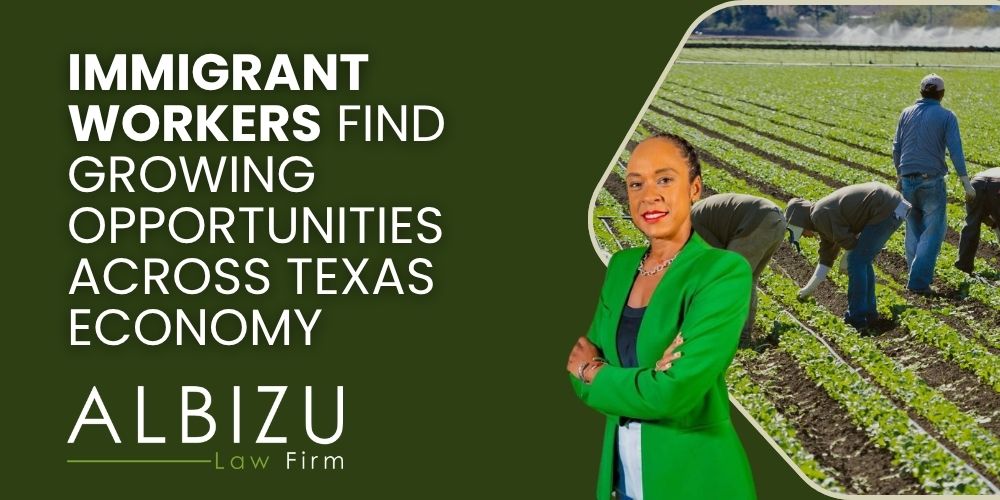
While Florida is taking a tougher stance toward undocumented immigrants, Texas appears, in some ways, to be embracing this source of labor despite its own immigration regulations. The contrast is striking: while many immigrants in Florida struggle with recent restrictions, they are finding certain employment opportunities in Texas.
“The Texas population, like that of other states, is aging, and we have experienced a decline in the number of individuals in their prime working years. Those born outside the U.S. have come to fill that labor gap,” says Helen You, a representative of the Texas Demographic Center.
Texas’ economy, the second-largest in the country after California, benefits significantly from these workers, many of whom lack proper documentation. “Migrants from all over the world, together, we make a difference,” shares Carolina Vélez, a proud Mexican worker in Texas.
Florida, on the other hand, has taken a different path. Under Governor Ron DeSantis’ administration, Senate Bill 1718 was enacted, which is viewed as one of the strictest immigration laws. Among other restrictive measures, it requires employers to verify their workers’ legal status through E-Verify. Its implementation has caused considerable concern within the immigrant community.
Yanet Galvis, an immigrant rights advocate in Florida, says: “This law has created a great deal of fear. Many are considering moving to other states in search of better conditions.”
Despite Florida’s firm stance, it is important to note that both Florida and Texas are under Republican administrations, which historically have expressed concerns about illegal immigration. However, each state has responded differently.
Texas Governor Gregg Abbot has not hesitated to take a firm stance, particularly on border security issues. Nevertheless, the number of foreign workers in Texas has grown significantly over the past decade.
Following the impact of the pandemic, Helen You points out that “in 2022, foreign-born workers represented nearly 24% of Texas’ total workforce.”
Alberto Téllez, a Guatemalan resident of Texas, comments: “There are locals who choose not to work, while those who come from abroad do so because they are looking to get ahead.”
According to recent statistics, immigrants in Texas are predominantly employed in sectors such as services, construction, and transportation. “Our fellow Hispanics are the ones performing the most demanding jobs,” says Greicy Cocios, recognizing the tireless efforts of the Latino community in Texas.
Take Action Now: Your Future in Texas Matters to Us!
If this news has affected you or you know someone in a similar situation, you are not alone. At Albizu Law Firm, we specialize in immigration and family law cases, and for more than 16 years, we have been advocating for and guiding people like you in Austin, Texas.
The immigration landscape in the United States is constantly changing, and it is essential to have professionals who understand every detail and are prepared to fight for your rights and those of your family. Whatever your situation may be, our experienced attorneys are here to help you.
Call 512-861-5638 or visit the contact section of our website to schedule a consultation.
Your future and your family’s well-being are our priority. And if you found this information valuable, please feel free to share it. Together, we can make a difference.