

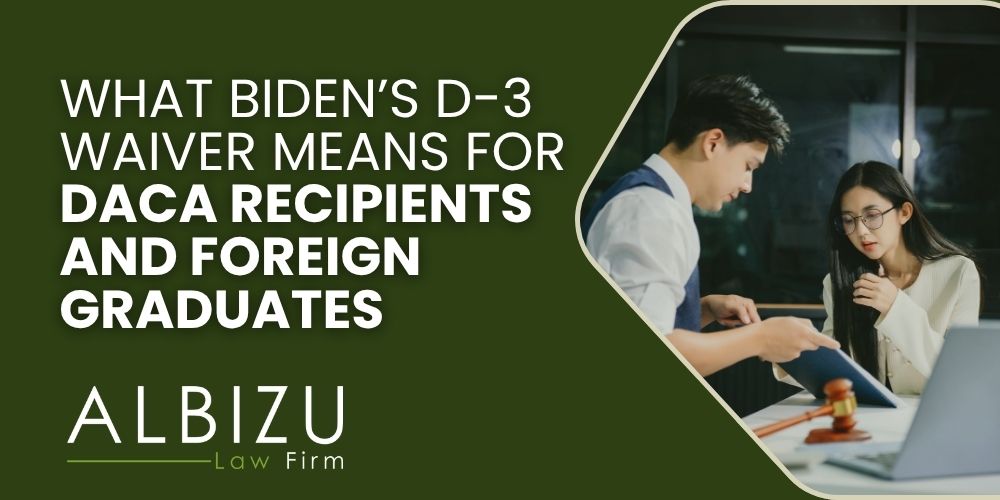
Have you wondered how the Biden administration’s recent immigration policies may affect foreign graduates and DACA recipients seeking to work in the United States? The answer could transform the future for many.
What Is the D-3 Waiver?
The D-3 waiver allows certain noncitizens who would otherwise be inadmissible to the United States, including some DACA recipients, to seek a temporary nonimmigrant visa despite certain grounds of inadmissibility. This waiver can be particularly important for DACA recipients who cannot change their status within the United States and must travel abroad to apply for a visa. In qualifying cases, the D-3 waiver may facilitate the transition to a work visa such as an H-1B.
How the Waiver Works in Practice
Imagine that you are a DACA recipient who has completed your education and received a job offer as an engineer at a technology company in the United States. The company decides to sponsor you for an H-1B visa. However, because of your immigration history, you cannot change your status directly from within the United States. This means you must travel to a U.S. consulate abroad to apply for the visa.
During the consular process, you must disclose relevant periods of unlawful presence and other immigration history. If a ground of inadmissibility applies, you may need to request a D-3 waiver. If the waiver and visa are approved, you may receive the H-1B visa in your passport and seek admission to the United States to begin your new employment as an engineer.
Key Aspects of the Updated Guidance
The updated guidance encourages consular officers to consider certain factors when evaluating D-3 waiver cases, including:
- Recognizing the potential public-interest benefits associated with applicants who graduated from U.S. educational institutions or possess specialized skills, particularly those seeking to enter the United States to begin or continue employment in a field related to their education.
The guidance also addresses efforts to streamline the visa and waiver process for certain qualified applicants.
How Employers Can Support Their Employees
Employers can play an important role in supporting employees who may need a D-3 waiver. Some steps they can take include:
- Educate and Inform: Share information about the D-3 waiver and relevant guidance. Make sure appropriate departments, such as human resources and legal, understand how these policies may affect employees.
- Identify Potentially Eligible Employees: Determine whether employees may benefit from an immigration assessment regarding the D-3 waiver and provide appropriate support.
- Provide Resources and Assistance: Share information about the waiver process and assist employees in gathering necessary documentation. Employers may also consider providing access to immigration counsel or other professional resources.
- Create a Supportive Environment: Encourage support among DACA recipients and other employees who may face similar immigration challenges. Professional networks and peer support can help individuals navigate the process.
The Biden administration’s guidance represented an important development in the D-3 waiver process, potentially providing additional opportunities for certain foreign graduates and DACA recipients to contribute their skills to the U.S. economy.
Were you surprised by how the Biden administration’s guidance could affect the D-3 waiver process? Share this article with others who may benefit from this information. If you have questions or need personalized guidance about how these policies may affect your situation, schedule a consultation by calling 512-861-5638.